
Ritwik Ghatak
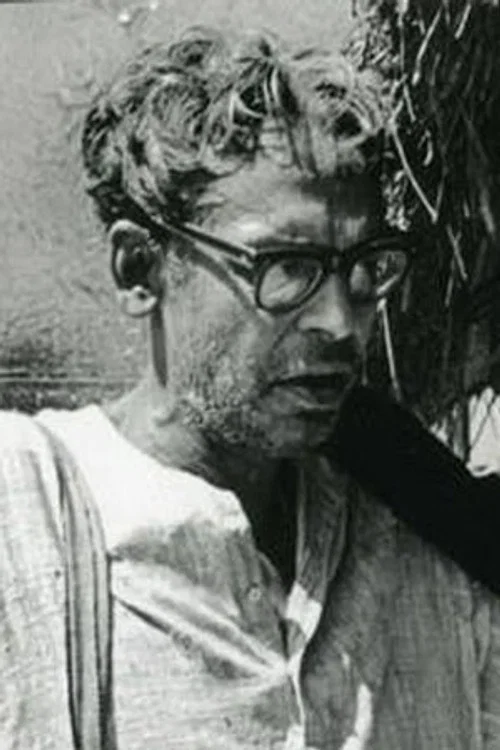
Ritwik Kumar Ghatak (4 November 1925 – 6 February 1976) was an Indian film director, screenwriter, actor, and playwright whose work in Bengali cinema stands as one of the most singular and uncompromising bodies of art produced in twentieth-century India. Born in Dhaka, then part of undivided Bengal, Ghatak belonged to a generation scarred by the trauma of Partition, and the forcible division of Bengal in 1947 became the defining wound of both his life and his cinema. Though his films received scant commercial recognition during his lifetime, he is now widely regarded as one of the greatest filmmakers in the history of world cinema, a visionary whose work has been championed by the Criterion Collection, retrospected at the Harvard Film Archive, and celebrated by scholars and filmmakers across the globe.
Working primarily in the Bengali language, Ghatak produced a relatively small body of work — eight completed feature films over a career spanning two and a half decades — yet the density of intellectual, emotional, and formal ambition packed into these films is extraordinary. His so-called Partition Trilogy — Meghe Dhaka Tara (1960), Komal Gandhar (1961), and Subarnarekha (1962) — constitutes a sustained meditation on displacement, cultural erasure, and the human cost of political division, rendered through a cinematic language that drew equally from Indian classical aesthetics, Brechtian theatre, and the visual traditions of Bengali folk art. His films belong unmistakably to the milieu of Indian parallel cinema, yet they resist easy classification within that movement, possessing a raw, visceral intensity that sets them apart from the more measured social realism of his contemporaries.
Ghatak was also a seminal figure in Indian film education. His tenure as Vice Principal at the Film and Television Institute of India (FTII) in Pune proved enormously influential: among his students were Mani Kaul, Kumar Shahani, Adoor Gopalakrishnan, Saeed Akhtar Mirza, and John Abraham, filmmakers who would go on to shape the New Indian Cinema of the 1970s and 1980s. He received the Padma Shri in 1970 from the Government of India, and won the National Film Award for Best Story in 1974 for his final film, Jukti Takko Aar Gappo. Notwithstanding these recognitions, Ghatak died in 1976 in relative obscurity, his films only beginning their long posthumous journey towards canonical status in the decades that followed.
The distinctive quality of Ghatak's achievement lies in his refusal to separate personal anguish from political analysis. His cinema is both autobiography and ethnography — a record of one man's grief over a lost homeland and a rigorous inquiry into the social and historical forces that produced that loss. His formal innovations in the use of sound, his mythologically charged imagery, and his elliptical narrative structures anticipate many of the concerns of international art cinema while remaining deeply rooted in the specific cultural terrain of Bengal. In the decades since his death, Ghatak has come to be recognised not merely as a great Indian filmmaker but as a world-historical figure in the art of cinema.
Life and Early Work
Ritwik Ghatak was born on 4 November 1925 in Dhaka, at the time a city within the Bengal Presidency of British India and now the capital of Bangladesh. He was one of nine children born to Suresh Chandra Ghatak, a district magistrate and poet of modest distinction, and his wife. The family's frequent relocations, necessitated by the father's administrative postings across Bengal, instilled in Ghatak an early awareness of movement, rootedness, and the fragility of home — themes that would later permeate every aspect of his creative work. Following his father's retirement, the family settled in Rajshahi, then a thriving cultural centre of eastern Bengal, where Ghatak received his formative education.
It was in Rajshahi that Ghatak first encountered theatre, making his acting debut at the age of fourteen in a local production. He displayed an early aptitude for the dramatic arts that would accompany him throughout his life, and he pursued this interest during his undergraduate studies at Rajshahi College. By 1946, he had published his first short story, demonstrating a literary sensibility that would complement his theatrical and, eventually, cinematic ambitions. He subsequently moved to Kolkata to study English literature at Presidency College, one of the preeminent institutions of higher education in Bengal, where he was exposed to a broader current of intellectual and artistic debate.
The defining rupture of Ghatak's life occurred with the Partition of India in 1947. The division of Bengal — cleaving the culturally unified region into an Indian West Bengal and a Pakistani East Bengal — forced Ghatak's family, like millions of others, to abandon their home in the east and migrate to Kolkata. This displacement was not merely a biographical fact but a psychic wound that never healed. Ghatak viewed the Partition of Bengal as a cultural catastrophe of the first order, an act of political violence that severed the living roots of a civilisation, and he returned to it obsessively in his writing, his theatrical work, and his films for the rest of his life.
In Kolkata, Ghatak immersed himself in the left-wing cultural politics of the era. He became a member of the Communist Party of India and, most significantly, joined the Indian People's Theatre Association (IPTA), the influential progressive cultural organisation that sought to mobilise the arts in the service of social transformation. Within IPTA, Ghatak worked prolifically as a playwright, director, and actor. He wrote his first play, Kalo Sayar, in 1948, the same year that the celebrated leftist play Nabanna — which had inaugurated a new era of political theatre in Bengal — was gaining wide recognition. He directed and acted in numerous IPTA productions, and he translated works by Bertolt Brecht and Nikolai Gogol into Bengali, absorbing Brecht's theories of epic theatre and alienation effects that would profoundly shape his subsequent cinematic practice. His theatrical work during this period established him as one of the most gifted young creative forces in Bengali cultural life.
Filmmaking
Ghatak's entry into cinema came through his association with Nimai Ghosh's Chinnamul (1950), a landmark neorealist film about Partition refugees in which he served as actor and assistant director. Chinnamul, depicting the uprooted lives of those displaced by the division of Bengal, provided Ghatak with his first sustained exposure to the possibilities of film as a medium for social documentation and emotional truth. His experience on the production crystallised his ambition to direct, and within two years he had completed his first feature film as director.
That first feature, Nagarik (The Citizen, 1952), was a work of striking maturity and ambition that examined the disintegration of a middle-class family in the refugee-swollen Calcutta of the early 1950s. Shot in a restrained, observational style informed by Italian neorealism yet already inflected with Ghatak's own theatrical sensibility, Nagarik stands in retrospect as possibly the earliest Bengali art film, predating Satyajit Ray's celebrated Pather Panchali by three years. The film, however, could not secure a distributor and was not publicly released during Ghatak's lifetime; it was only screened posthumously in 1977, a fate emblematic of the director's difficult relationship with the commercial film industry throughout his career.
Ghatak's next feature, Ajantrik (Pathetic Fallacy, 1958), marked a significant departure in both subject and style. Set among the tribal communities of the Chhota Nagpur plateau in Bihar, the film explored the peculiar emotional bond between a taxi driver and his battered, antiquated car, employing the landscape and its inhabitants with a lyrical freedom that anticipated later developments in world cinema. Ajantrik received a Certificate of Merit at the 6th National Film Awards and was screened internationally, introducing Ghatak's work to foreign audiences for the first time. The film also demonstrated his capacity to work outside the confines of the Partition narrative that would come to define his central preoccupation.
The years between 1960 and 1962 saw the production of Ghatak's most celebrated work, the trilogy of films that has come to be known collectively as the Partition Trilogy. Meghe Dhaka Tara (The Cloud-capped Star, 1960) tells the story of Nita, a young woman from a refugee family in Calcutta who sacrifices her own aspirations entirely in order to support her siblings, and is ultimately destroyed by their ingratitude and her own selflessness. The film's formal boldness — its startling use of non-diegetic sound, its abrupt juxtapositions, its capacity to hover between melodrama and tragedy — established Ghatak as a director of the first rank. Komal Gandhar (E Flat, 1961) dealt with the beleaguered leadership of the IPTA itself, using the organisation's internal divisions as a mirror for the larger cultural fragmentation wrought by Partition. It is arguably the most politically direct of Ghatak's films. Subarnarekha (The Golden Thread, 1962) was the third and, in many respects, the most uncompromising film of the trilogy, tracing the fates of three refugee characters across two decades, weaving questions of caste, gender, and the impossibility of return into a narrative of almost unbearable tragic intensity. The film's formal structure — elliptical, associative, resistant to linear causality — marked Ghatak's most radical departure from conventional storytelling.
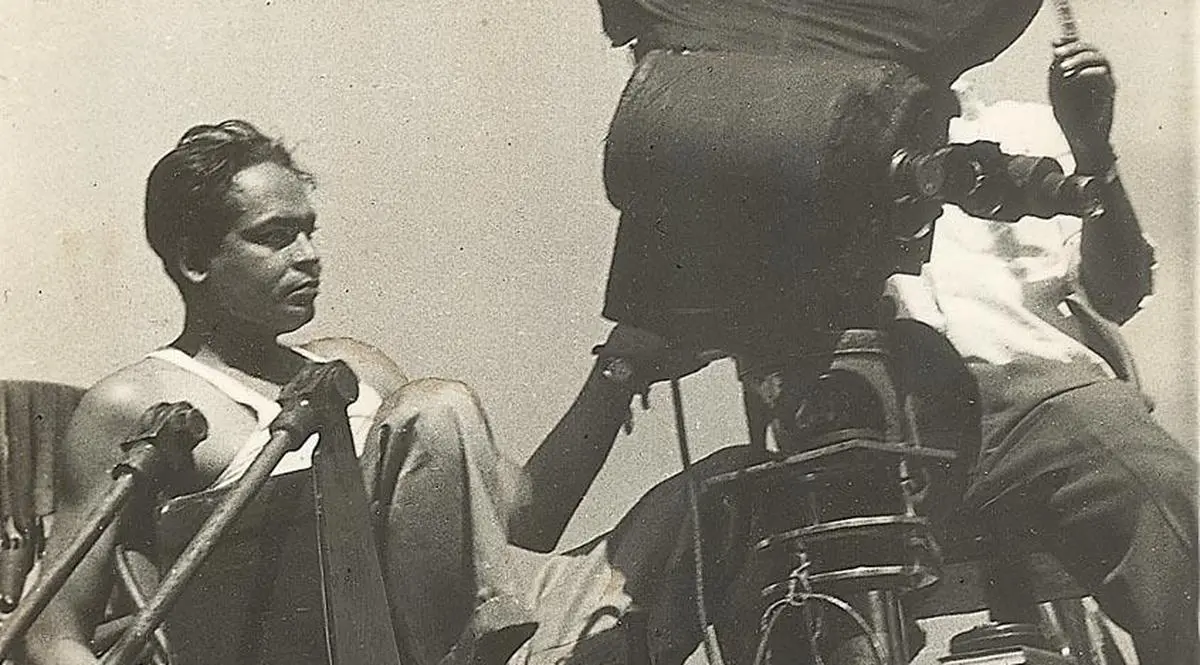
Following the completion of the Partition Trilogy, Ghatak's output slowed dramatically. He directed Subarnarekha in 1962 but the film was not released until 1965, by which time he was increasingly beset by personal difficulties, including his growing dependence on alcohol. He spent much of the mid-1960s in Bombay attempting to work within the Hindi commercial film industry, an experiment that proved largely unsatisfying, though he wrote screenplays for a number of productions. In 1966, he accepted a position at the Film and Television Institute of India in Pune, where he taught as Vice Principal for several years. His time at FTII, though marked by his own personal instability, proved enormously generative: his lectures and seminars became the stuff of legend, his ideas on cinema, aesthetics, and social responsibility shaping the outlook of an entire generation of filmmakers who would transform Indian cinema in the 1970s.
In 1973, Ghatak was invited by a Bangladeshi producer to direct Titash Ekti Nadir Naam (A River Called Titas), based on a celebrated novel by Adwaita Malla Burman about the fishing communities of the Titas river in what is now Bangladesh. The film — a vast, elegiac work spanning multiple generations, structured through interconnected narratives in a manner that anticipates later experiments in hyperlink cinema — is widely regarded as one of his masterpieces. Shot in Bangladesh, it represented Ghatak's return, however provisional, to the landscape of undivided Bengal he had lost in 1947. He won the Bangladesh Cine Journalists' Association Award for Best Director for the film.
His final film, Jukti Takko Aar Gappo (Reason, Debate and Story, 1974), was an overtly autobiographical work in which Ghatak himself played the central character: an ageing, alcoholic intellectual wandering through West Bengal during the Naxalite unrest of the early 1970s. Part road film, part political essay, part confessional self-portrait, the film is among the most nakedly self-revelatory works in the history of cinema. It won Ghatak the National Film Award for Best Story in 1974. He died on 6 February 1976, aged fifty, in a Calcutta hospital, his health broken by years of illness and alcoholism.
The Cinema of Ritwik Ghatak
Ritwik Ghatak's cinema occupies a position at once central and anomalous within the history of Indian film. He is a contemporary of Satyajit Ray and Mrinal Sen — the founding figures of Bengali parallel cinema — and shares with them a commitment to social seriousness and artistic ambition. Yet his work is tonally and formally unlike either of theirs. Where Ray's cinema is characterised by a luminous humanism and precise psychological observation, and Sen's by a more overtly didactic political intelligence, Ghatak's films are marked by a raw, almost operatic emotional intensity, a willingness to move between registers of melodrama and realism, and a formal restlessness that approaches the condition of music. He described his own aesthetic project as one of creating a specifically Indian cinematic language, grounded not in the conventions of European or Hollywood cinema but in the formal traditions of Indian classical music, folk theatre, and mythology.
Central to Ghatak's formal approach is his revolutionary use of sound. In an era when Indian cinema generally treated the soundtrack as secondary to the image — a vehicle for popular songs and conventional dramatic scoring — Ghatak employed sound with a sophistication that has few parallels in world cinema of the period. He used sound contrapuntally, creating deliberate dissonances between image and soundtrack, deploying folk songs, classical ragas, and ambient noise as structural and emotional elements rather than mere accompaniment. The wail of a train, the cry of a bird, or the sudden intrusion of a classical vocal phrase could function in his films as a form of punctuation or commentary, rupturing the surface of the narrative to reveal deeper currents of feeling and meaning. This approach derived in part from his study of Brecht, but it was inflected by a specifically Indian sensibility rooted in the rasa theory of classical aesthetics.
Equally important to Ghatak's cinema is its mythological dimension. Ghatak was deeply versed in Indian classical literature, and he consistently structured his films around archetypes drawn from Hindu mythology and Bengali folk tradition. The women at the centre of his films — Nita in Meghe Dhaka Tara, Anusua in Komal Gandhar, Sita in Subarnarekha — are simultaneously realistic characters embedded in specific social situations and mythological figures whose fates carry the weight of collective experience. In Subarnarekha, for instance, the character of Sita is explicitly linked to her namesake from the Ramayana, but Ghatak's deployment of this parallel is critical and subversive: his Sita is a woman from the margins of society whose fate exposes the violence concealed within the epic's patriarchal order. This mythological dimension gives Ghatak's films a resonance that extends far beyond their immediate social content, situating individual suffering within the longue durée of cultural history.
Key Themes
Partition and Cultural Displacement: The division of Bengal in 1947 is the animating wound of Ghatak's entire oeuvre. His films return again and again to the figure of the refugee — uprooted, dispossessed, unable to reconstruct in Calcutta the cultural wholeness they have lost in East Bengal. Ghatak regarded the Partition not merely as a political event but as a civilisational rupture, and his films explore its consequences with an urgency born of lived experience. The landscape of East Bengal, its rivers and villages and rhythms, is invoked repeatedly in his cinema as a lost paradise whose absence haunts every frame.
The Sacrifice of Women: Ghatak's films consistently place women at the centre of their dramatic and symbolic structures, and they explore with painful acuity the ways in which women's aspirations and capacities are systematically crushed by familial and social obligations. Nita in Meghe Dhaka Tara devotes herself entirely to her family's survival, only to be abandoned and destroyed. Sita in Subarnarekha is driven to a fate of extraordinary violence. These narratives are not simply expressions of feminist sympathy — though they are that — but explorations of the ways in which a society in crisis displaces the costs of its failures onto its most vulnerable members.
Mythology and Modernity: Ghatak was preoccupied throughout his career with the tension between the inherited cultural resources of Indian civilisation — its myths, its folk traditions, its classical aesthetic systems — and the disorienting pressures of modern economic and political life. His films stage this tension with formal strategies derived from both traditions, creating a cinematic language that is simultaneously modern in its self-reflexivity and ancient in its symbolic dimensions.
Sound as Form: Ghatak's formal innovation lay above all in his treatment of sound. He employed the soundtrack not as background or accompaniment but as an independent expressive medium, capable of creating irony, pathos, and critical distance independently of the image. His soundscapes — layered, associative, sometimes jarring — remain among the most sophisticated and influential in the history of cinema.
Political Commitment and Disenchantment: Ghatak was a committed leftist throughout his life, a member of the Communist Party and a veteran of the IPTA. His films engage consistently with questions of class exploitation, caste oppression, and the failures of the post-independence political settlement. Yet his later work, particularly Jukti Takko Aar Gappo, also registers a profound disenchantment with the organised left and with the revolutionary politics of the Naxalite movement, suggesting a thinker unwilling to simplify the complexity of social reality in the service of any ideological programme.
Selected Filmography
Nagarik (1952)
Ghatak's debut feature, completed in 1952 but not released publicly until 1977, a year after his death. Set in Calcutta amidst the refugee crisis produced by Partition, the film follows the disintegration of a middle-class family's aspirations as they confront the brutal realities of displacement and economic precarity. Formally influenced by Italian neorealism, Nagarik is among the earliest examples of the Bengali art film tradition and anticipates many of the thematic concerns of Ghatak's mature work.
Ajantrik (1958)
A lyrical and formally inventive film set in the Chhota Nagpur tribal belt of Bihar, centred on the bond between a solitary taxi driver and his decrepit automobile, which he treats as a sentient companion. The film blends social observation with a near-mythological tenderness for the non-human world, and its elliptical structure and striking cinematography won it a Certificate of Merit at the 6th National Film Awards and considerable international attention.
Meghe Dhaka Tara (1960)
The first film of the Partition Trilogy and Ghatak's most celebrated work. The film follows Nita, the eldest daughter of a refugee family in Calcutta, whose relentless self-sacrifice enables her siblings' advancement at the cost of her own life. Formally audacious in its use of sound and its oscillation between intimacy and expressionism, Meghe Dhaka Tara is considered a masterpiece of world cinema and a definitive portrait of the human costs of displacement.
Komal Gandhar (1961)
The second film of the trilogy, dealing with the internal divisions of the IPTA as a metaphor for the fractured condition of post-Partition Bengali culture. Structured around the dilemma of its female protagonist Anusua, the film interrogates both personal and political modes of reconciliation, and its closing sequence — set against the ruins of a bridge near the Indian-East Pakistani border — is among the most visually powerful in Ghatak's oeuvre.
Subarnarekha (1962)
The most formally radical of the trilogy, tracing three refugee characters across two decades as their aspirations are progressively destroyed by the social forces of caste, class, and historical accident. The film's mythological subtext — its heroine is named Sita, her brother Abhiram — is deployed with critical and subversive intent, and its climactic sequence reaches an almost unbearable pitch of tragic intensity. Released only in 1965, the film was poorly received commercially but has subsequently been recognised as one of the greatest achievements of Indian cinema.
Titash Ekti Nadir Naam (1973)
Commissioned by a Bangladeshi producer and shot on location in what is now Bangladesh, this epic adaptation of Adwaita Malla Burman's novel traces the lives of fishing communities along the Titas river across multiple generations. Structured through interwoven narratives, the film combines Ghatak's characteristic formal boldness with an elegy for a vanishing way of life and, implicitly, for the undivided Bengal he had lost in childhood. It won the Bangladesh Cine Journalists' Association Award for Best Director.
Jukti Takko Aar Gappo (1974)
Ghatak's final film, in which he himself played the central character: an ageing, alcoholic intellectual wandering through West Bengal during the political upheavals of the early 1970s. Part road film, part political essay, part confessional autobiography, the film is one of the most nakedly self-revelatory works in the history of cinema. It won the National Film Award for Best Story in 1974.
Legacy
The trajectory of Ritwik Ghatak's posthumous reputation is itself a remarkable cultural phenomenon. During his lifetime, his films were largely ignored by commercial distributors, misunderstood by critics, and unseen by general audiences. Even within the parallel cinema movement, which he had helped to inaugurate, he remained a marginal figure, overshadowed by the more accessible and internationally celebrated work of Satyajit Ray. He died in 1976 in relative obscurity, his personal life in ruins, his later films barely seen.
In the years following his death, however, a gradual and then accelerating process of reassessment began. The retrospectives and publications of the 1980s and 1990s introduced his work to new generations of filmmakers and scholars in India and abroad. In 2001, the Harvard Film Archive presented a comprehensive retrospective that positioned Ghatak as a pivotal figure in postwar world cinema. The Criterion Collection subsequently released restored editions of his films, providing wider international audiences with access to work of whose existence many had been unaware. By the 2010s, Ghatak had come to be recognised not merely as an important Indian filmmaker but as one of the canonical figures of the global art cinema tradition, his films discussed alongside those of Robert Bresson, Andrei Tarkovsky, and Jean-Luc Godard.
His influence on subsequent Indian filmmakers has been profound and pervasive, if often difficult to trace precisely because it operates at the level of sensibility and formal aspiration rather than direct imitation. His students at FTII — Mani Kaul, Kumar Shahani, Adoor Gopalakrishnan, John Abraham — carried his ideas about cinematic form, political commitment, and cultural rootedness into their own very different practices. More broadly, the generation of Indian filmmakers who came of age in the 1970s and 1980s, including those working in Kannada, Malayalam, Marathi, and Assamese cinemas, absorbed something of Ghatak's uncompromising seriousness even when they did not know his films directly. Contemporary filmmakers such as Anurag Kashyap have cited him as a formative influence.
The institutional recognitions Ghatak received in his lifetime — the Padma Shri in 1970, the National Film Award for Best Story in 1974 — seem, in retrospect, inadequate to the scale of his achievement, though they testify to the fact that his importance was recognised even by those who did not fully understand his work. His birth centenary in 2025 was marked by retrospectives, publications, and events across India and internationally, confirming his status as a figure of enduring cultural significance.
What ultimately distinguishes Ghatak from his contemporaries is not merely the formal brilliance or the emotional intensity of his films but the radical honesty with which he faced the contradictions of his own position. He was a leftist who distrusted ideological simplicity; an artist committed to the popular who found himself unable to make popular films; a man who loved Bengal with an overwhelming devotion and was destroyed, in part, by the impossibility of returning to the Bengal he loved. His cinema is the direct expression of these contradictions, and it is for this reason that it retains its power to disturb, to move, and to illuminate long after the specific historical circumstances that produced it have receded from living memory. Ritwik Ghatak remains one of the indispensable artists of the twentieth century.